
IPL Cricket ID — Get Your Gold365 IPL Betting ID
An IPL cricket ID is your betting account for the IPL season: match odds, toss, session runs and player markets on all 74 fixtures. Gold365 issues IPL IDs on WhatsApp in 2–5 minutes with UPI deposits from ₹100, so you can be ready before tonight's toss.
Every April, the same story repeats across India: the toss is at 7:00, your friends already have their odds open, and you're still hunting for a working ID. That last-minute scramble is exactly what this page solves. And then it goes a lot further.
I've worked IPL seasons on the ID desk since before double-headers were a thing, and the difference between players who enjoy the season and players who spend it frustrated comes down to preparation and understanding. So beyond the basic "how to get an ID" steps, this page covers the stuff that actually decides your season: how session markets price and re-price ball by ball, the greening-up trade with the exact lay-stake formula, how fixture rhythm (venues, dew, afternoon games) moves prices, a full worked match example with real rupee numbers, and the honest fine print on season offers. Settle in, it's long because the season is long.
What Is an IPL Cricket ID and What Does It Cover?
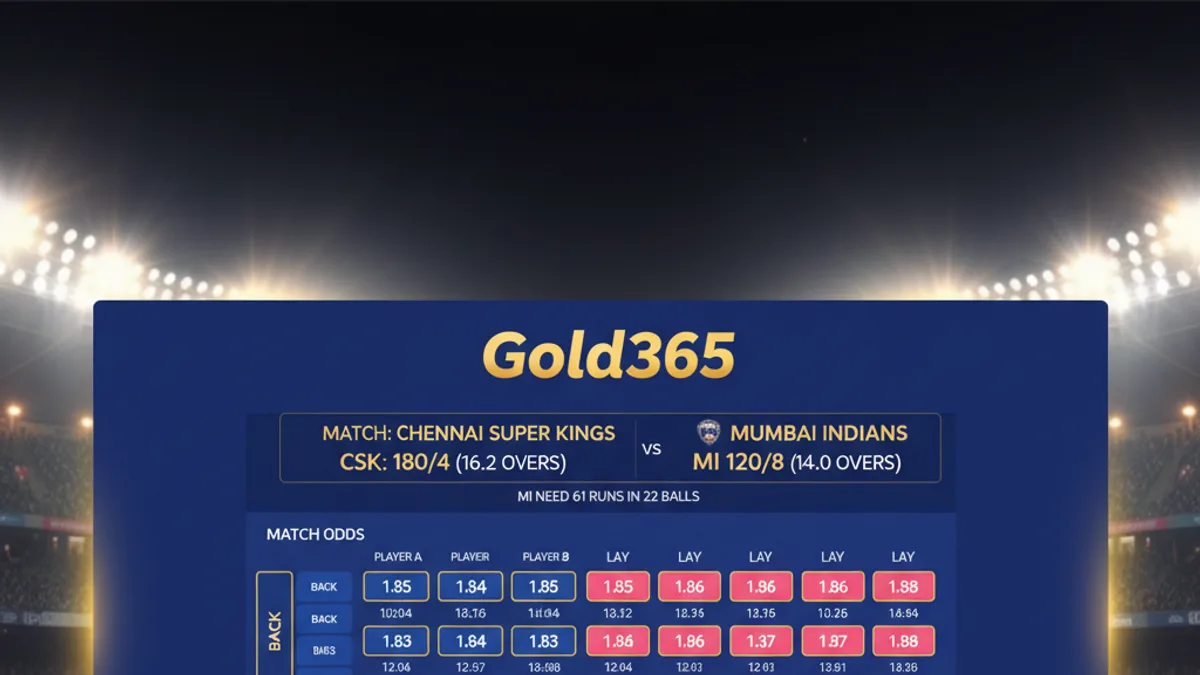
It's a Gold365 exchange account tuned for the IPL: pre-match odds, in-play back and lay, toss market, session runs (6-over, 10-over, 15-over), fall of next wicket, and player props like top batter. One wallet, one login, every fixture from the opener to the final.
The phrase "IPL ID" gets thrown around loosely, so here is the honest version: it's not a separate product, it's a full online cricket ID that people request during IPL season because that's when demand peaks. The advantage of getting it through Gold365 rather than a random Telegram bookie is exchange pricing. On an exchange you bet against other players at market-driven odds, which are consistently sharper than the fixed odds a local bookie quotes. And you can lay (bet against) a team, something no bookie will let you do.
The same login also opens everything else on the platform: Aviator between innings, live casino tables on rain-delay nights, football and tennis in the off-season. But during April and May, these are the markets you'll actually live in:
Why Gold365 for IPL Betting?
- Speed when it matters: ID creation and password resets run 24×7 on WhatsApp, including the 15 minutes before a toss when every other desk is jammed.
- In-play depth: session and wicket markets stay open deep into the innings instead of suspending at the first sign of a big over.
- Instant money movement: UPI deposits reflect in about 40 seconds; withdrawals typically settle in 10–15 minutes, even at midnight after the second game.
- One wallet, everything: the same ID also runs Aviator, live casino tables and non-cricket sports between matches.
- Mirror access: if the main site is slow on match night, portals like Gold365 Win and Gold365 Blue take the same login.
And one honest limitation, because trust is built on the downsides too: on the very biggest nights (CSK vs MI, an eliminator, the final) everything in this industry slows down. Odds refresh a beat later, support replies take four minutes instead of one, withdrawal queues stretch. Gold365 handles the load better than most desks I've seen, but "better than most" is not "immune". Plan around the rush and it never becomes your problem; the toss-time drill below shows exactly how.
Toss Is at 7:30 — Be Ready by 7:25
WhatsApp us now, deposit via UPI, and your IPL cricket ID is live before the anthem ends.
Get IPL ID Now WhatsApp NowToss-Time ID Creation: The 7:20 PM Drill, Minute by Minute
A toss-time ID is possible but tight: message by 7:18, username confirmed by 7:20, UPI paid by 7:22, credentials by 7:25, first login and toss bet by 7:28. Any single delay (a UPI retry, a busy agent) and you miss the coin. Afternoon requests remove all of it.
Because so many players insist on doing this the hard way, this is the actual minute-by-minute for a 7:30 toss, taken from how the desk really runs on match evenings:
- 7:16–7:18: Send the first message. "New IPL ID" is enough. Don't send a paragraph; short messages get picked faster from the queue.
- 7:19–7:20: Username confirmed. Have two options ready in case your first choice is taken. Every back-and-forth costs 60–90 seconds here.
- 7:20–7:22: Pay via UPI. GPay and PhonePe both clear in under a minute normally. But — and this is the killer — UPI itself gets congested at 7:15–7:30 on match nights because lakhs of people are ordering food and topping up wallets at the same time. A payment that pends for three minutes at exactly the wrong moment is the most common reason toss bets get missed.
- 7:23–7:25: Screenshot sent, credentials arrive. The agent creates the account and drops your ID and password in the chat.
- 7:25–7:28: First login. Change the password, find the fixture, open the toss market. You have maybe ninety seconds of price before the coin goes up.
Can it work? Yes — the desk does this dozens of times every match evening. Should you rely on it? No. Request the ID in the afternoon, keep ₹500 in the wallet, and the entire drill becomes someone else's stress. The players who message at 2 PM spend 7:25 looking at team sheets instead of payment screens. It really is that simple.
How to Get Your IPL ID the Sensible Way
- Message on WhatsApp: tap any green button on this page and send "IPL ID".
- Share a username you'd like for your login.
- Deposit via UPI/IMPS. Minimum starts around ₹100–₹500 depending on the running offer.
- Receive ID + password in 2–5 minutes and log in on the site or Gold365 app. If the password gives trouble, the login guide covers resets.
- Open the IPL fixture and place your first bet — toss markets open well before the broadcast.
Pro tip from the support desk: don't wait for 7:25 PM on a double-header Sunday. The afternoon game finishes, everyone remembers the evening game exists, and the 6:30–7:30 window becomes the single busiest hour of the desk's week. Request early, fund early, sleep easy.
How Do Live Odds and In-Play Markets Work?
Odds on a Gold365 IPL market move ball by ball. A wicket, a dropped catch or two sixes in an over reshapes prices instantly. You can back a team pre-match and lay the same team later at shorter odds to lock a profit whichever side wins. That's exchange trading, and it's the core of IPL betting.
The screen shows two columns for each team: blue cells to back (bet the team wins) and pink cells to lay (bet it doesn't). The numbers are set by opposing players' orders, not by a bookie's margin, which is why exchange prices run tighter. Between deliveries the market breathes; at high-impact moments (a wicket, a review, a free hit) it suspends for a few seconds so prices can reset fairly. New players sometimes panic at suspensions and message support thinking their ID is broken. It isn't; that pause is the exchange doing its job. If back-vs-lay is new to you, the Gold365 sports betting guide walks through it with annotated screenshots.
Session Markets: Where IPL Regulars Actually Live
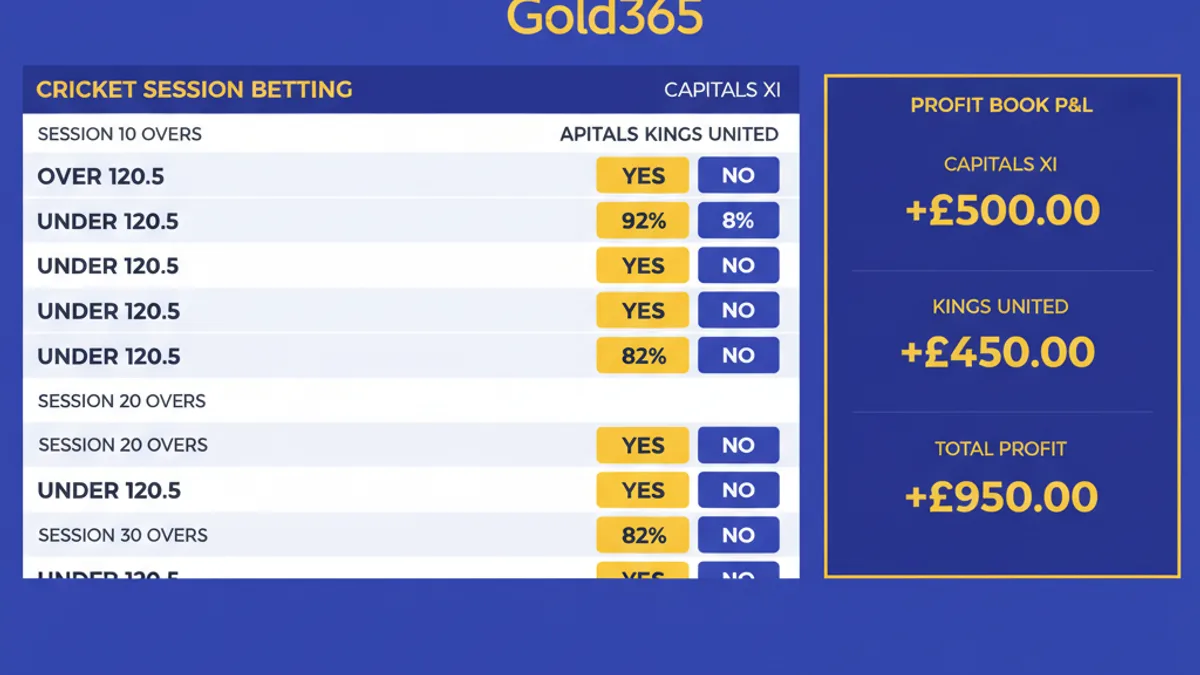
Session markets are over/under lines on runs in a set stretch: first 6 overs, 10 overs or 15 overs of an innings. The line (say 52 runs for the powerplay) re-prices after nearly every ball. You bet Yes if you think the batting side clears it, No if you don't.
Match odds get the headlines, but sessions are where experienced IPL players spend their evenings, because sessions reward genuine cricket reading. A 6-over line of 52 at Chinnaswamy is a different animal from 52 at Chepauk. One ground laughs at that number, the other makes batsmen sweat for it.
A worked example with real numbers. The 6-over session line is 52–54: you can take No at 52 (under) or Yes at 54 (over), each at roughly even money. You read the pitch as sticky, the opener as out of form, and put ₹500 on No at 52. Two overs in, it's 9/1 and the line has crashed to 44–46. Your position is now beautifully green: you can let it ride to settlement, or take Yes at 46 with a smaller stake and lock profit both sides of the line. Sessions settle fast, within moments of the sixth over ending, and the money is back in your wallet for the 10-over line.
Two warnings from the desk. First, session markets suspend aggressively around wickets and reviews, and the line can jump four or five runs while you were typing a stake. Always glance at the current line before confirming, not the one you saw ten seconds ago. Second, sessions are addictive precisely because they settle quickly; a player who'd never bet ₹2,000 on a match happily loses it ₹400 at a time across five sessions. Decide your per-match session budget before the anthem.
The Toss Market: Fifty-Fifty, Settled in Seconds
The toss is the purest market on the card: two outcomes, no form, no pitch, a genuine coin flip priced at 1.98–1.98 (the tiny gap off 2.00 is the exchange commission doing its work). It settles the instant the coin lands, which makes it the traditional first bet on a new ID: you learn the bet slip, the settlement flow, and the balance update inside one minute of real match time. Just don't build a "toss strategy". I have seen players track toss trends across seasons, convinced captains have lucky calls. It's a coin. It has no memory, and neither should your stake. Keep toss bets small and ceremonial.
Greening Up: Locking Profit Whichever Team Wins
Greening up means backing a team at big odds, then laying the same team at shorter odds with a calculated stake so both outcomes show profit. The formula: lay stake = (back stake × back odds) ÷ lay odds. It's the single most valuable skill an IPL exchange ID unlocks.
This is the trade that separates exchange players from bookie punters, so let's do it properly with numbers.
RCB are chasing 180. Before the innings you backed them with ₹1,000 at 2.50. If they win you collect ₹2,500 (₹1,500 profit); if they lose, you're out ₹1,000. Kohli goes big in the powerplay and RCB's price shortens to 1.60. Now apply the formula: lay stake = (1,000 × 2.50) ÷ 1.60 = ₹1,562. You lay RCB at 1.60 for ₹1,562.
Follow the money both ways. If RCB win: your back bet pays +₹1,500, your lay bet loses −₹937 (that's ₹1,562 × 0.60), net +₹563. If RCB lose: your back bet loses −₹1,000, your lay bet pays +₹1,562, net +₹562. Roughly ₹560 profit either way, with ten overs still to bowl. You can watch the death overs as a fan again, phone face down. That's a green book.
Experience adds a few things to the textbook here. You don't have to green fully: laying half the calculated stake keeps some upside on your original view while cutting the downside. The lay side needs available money in the market, so on small player-prop markets your full stake may not get matched instantly; match odds on IPL games are deep enough that this is rarely an issue. And greening works in reverse for cutting losses. If your backed team collapses, laying at the now-higher price caps the damage at a known figure instead of the full stake. Traders call it "redding up", and knowing when to take a small guaranteed loss is honestly the more valuable habit.
The Stream-Delay Problem: Why Your "Live" Feed Is Behind the Market
This one costs new in-play bettors more money than any strategy mistake, so read it twice. The exchange market moves on ground truth, what actually just happened at the stadium. Your OTT stream runs 30–90 seconds behind that reality, and even satellite TV is 8–15 seconds behind. So when you see a six on your phone stream and rush to bet, the market priced that six a minute ago. Worse: sharp players at the ground, or on faster feeds, have already taken the value out of the price you're about to accept.
What this means in practice. Never bet reactively off a hotstar-speed stream. If your reason for the bet is the ball you just watched, you're a minute late and the price already knows. Bet positionally instead: on reads that play out over overs, not deliveries: a session line you think is wrong, a chasing side priced too long before dew arrives, a set batsman the top-batter market is undervaluing. Positional views survive a ninety-second delay comfortably; reactive punts get eaten by it every single time. And if a price looks weirdly generous right after a big moment on your stream, it is not a gift. It means something newer has already happened that your feed hasn't shown you yet. A too-good price on a delayed feed is a warning, not an opportunity.
Player Props and Top-Batter Markets: Small Markets, Honest Traps
Beyond match odds and sessions, every IPL fixture carries prop markets: top team batter, total match sixes, a batsman's runs line, fall of next wicket. They're fun, and occasionally they hold real value when the market's player ratings lag current form (say, a returning opener whose last five scores the algorithm hasn't digested).
But know what you're stepping into. Prop markets are thin, with far less money waiting on both sides, and that means two things. Prices are jumpier and less "true" than match odds, so a sharp-looking number may just be an unmatched stray order. And your own bet may sit unmatched, especially at ₹2,000+, because nobody is there to take the other side; always check whether your order actually matched before assuming you have a position. My rule after years of this: props get play-money stakes only (2–3% of the match budget), and only when I have a specific reason the market is slow on a player. "He looks in good touch" is not a reason; the market watched the same innings you did, sixty seconds earlier.
Reading Fixture Rhythm: Venues, Dew and Double-Headers
IPL prices have seasonal texture that casual bettors ignore and regulars quietly farm:
- Venue baselines: 6-over lines open around 55+ at small, flat grounds like Chinnaswamy and closer to 46–48 at slower tracks like Chepauk. The market knows this, but it's slower to adjust when a ground's character shifts mid-season after relaying or weather changes. Fresh eyes on the first two games at a venue earn money for the rest of the season.
- Dew in night games: from roughly the 8 PM innings onward, dew makes bowling grip harder and chasing easier. Chasing teams at many venues carry a hidden edge the toss market doesn't price but the match-odds market partially does. If the pre-match price on a strong chasing side looks a tick generous, dew is often why the value exists.
- Afternoon double-headers: the 3:30 PM Saturday/Sunday games play different: no dew, tired pitches, and thinner betting markets because half of India is still at lunch. Thinner markets mean prices drift further from true; both an opportunity and a trap.
- Fixture congestion: a team playing its third game in six days with two flights in between underperforms its price often enough to matter. Team-news minutes before the toss move markets violently. A resting captain can swing match odds ten ticks in seconds.
None of this is a guarantee, it's context. But context is exactly what session and match markets pay for, and the bettor who knows why the line opened where it did starts every evening a step ahead of the one who only knows the team names.
A Real Match Walkthrough: ₹2,000 Across One Evening
Here's an actual evening plan from last season, rounded for clarity, to show how the pieces fit. Budget: ₹2,000, hard cap.
| Time | Action | Stake | Result |
|---|---|---|---|
| 7:28 PM | Toss bet (ceremonial) | ₹100 @ 1.98 | Lost — ₹1,900 left |
| 7:35 PM | No on 6-over session at 51 (sticky pitch read) | ₹500 | Powerplay ends 43/2 — won ≈ ₹480 |
| 8:10 PM | Back chasing side pre-innings @ 2.35 | ₹800 | Position opened |
| 9:05 PM | Price shortens to 1.55 after fast start — lay ₹1,213 (formula) | — | Green book: ≈ +₹390 either way |
| 9:50 PM | Match ends; withdraw half the profit | — | ₹640 to UPI in 14 minutes |
Net for the evening: about +₹770 on ₹2,000 exposure, with the biggest position closed as a guaranteed profit an hour before the finish. Now the part nobody advertises: the previous week, the same approach lost ₹900 when a session read went wrong and the backed team never got ahead enough to green. That's the real rhythm of an IPL season: the structure doesn't make you win, it makes your losing weeks survivable and your winning weeks withdrawable. Keep a match log with stake, reasoning and result. By week three you'll know which of your reads actually earn and which just feel clever.
IPL Season Offers: What's Real and What's Bait
During the IPL window, Gold365 typically runs a first-deposit welcome bonus, refill bonuses on match days, and referral credits when a friend takes an ID through your word. Playoff weeks usually bring boosted offers. Handle any of them with three rules. First, every bonus carries a turnover condition (usually 2–3x wagering before the bonus converts to withdrawable balance), and the WhatsApp desk will state it in writing if you ask. Ask before depositing; support cannot retro-fit an offer after the payment. Second, refill bonuses are for money you were going to deposit anyway, not a reason to deposit more. An extra 5% on a deposit you didn't need is not a gift. Third, if an offer somewhere else sounds impossible ("200% bonus, instant withdrawal, no conditions"), it's bait from a desk you'll never withdraw from; the scam checklist on our online cricket ID page shows how those stories end. Full sign-up and bonus detail lives in the Gold365 ID guide.
The 60-Day Season Bankroll Plan
IPL is not one bet, it's a two-month campaign, and campaign money needs campaign rules. The structure that has kept the most players solvent through a full season on our desk:
- One season pot, decided in March. An amount whose total loss would annoy you but change nothing; for many players that's ₹5,000–₹15,000. It goes in mentally as spent entertainment money on day one.
- Per-match cap of 10%. On a ₹10,000 pot, no single evening sees more than ₹1,000 of exposure, however "certain" the game looks. The matches that look most certain are the ones that produce the famous collapses.
- Weekly settling. Every Monday, anything above the starting pot gets withdrawn to the bank. Profit that stays in the wallet is not profit; it's ammunition, and ammunition gets fired.
- The mid-season audit. Around match 35, tally your log. If you're down more than half the pot, halve your per-match cap for the rest of the season. Or better, sit out until the playoffs. The season will not miss you, and the playoffs are the best-priced stretch anyway.
- No borrowing, no "next month's pot". When the season money is done, the season is done. This rule has no exceptions, and it's the one that separates a hobby from a problem.
And playoffs deserve their own line: from the eliminators onward, markets get deeper and sharper because everyone is watching, but they also get more emotional: prices on fan-favourite teams run a tick short of true because loyalty money floods the back side. May is historically the best month of the season to be a calm layer of over-loved favourites. Make sure you still have bankroll left to be one.
Myth vs Fact: IPL Betting Edition
| Myth | Fact |
|---|---|
| "The toss decides everything, so bet the toss winner." | Toss advantage varies hugely by venue and time of year. The match-odds market already prices it within seconds of the coin landing. |
| "In-play odds are rigged against you." | Exchange odds are other players' orders. Suspensions at wickets are fairness resets, not manipulation. |
| "Home teams always cover at home." | IPL home advantage is real but small and fully priced. There is no free money in team loyalty. |
| "Session betting is just gambling on random overs." | Sessions reward pitch reading, matchup knowledge and speed more than any other cricket market. That's skill expression, not coin flipping. |
| "You need a big bankroll for exchange trading." | Greening up works identically at ₹200 stakes and ₹20,000 stakes. The formula doesn't check your wallet. |
| "A losing streak means the ID is 'cold'." | IDs don't run hot or cold. Variance does. Structure and stake sizing are the only answers. |
Mistakes IPL Bettors Keep Making
- Getting the ID at 7:20. Covered above. The drill works until the one night UPI pends, and that's always the night you had a strong view.
- Betting every match. There are 74 fixtures. Nobody has a real view on 74 games. The season rewards the player who sits out Tuesday's dead rubber.
- Chasing the powerplay. Lost the 6-over session? The 10-over line is not your recovery vehicle. That thinking turns one bad read into three.
- Ignoring the lay side. If you only ever back, you're using half the exchange. Some of the clearest IPL value is laying an over-hyped favourite at 1.45.
- Full stack on one match. A season bankroll spread across weeks beats a fortnight of hero bets. Decide a per-match cap; 10% of the season pot is a common rule.
- Withdrawal at 11:45 PM. The post-match queue is the slowest of the day. Withdraw at the innings break and the money often lands before the winning runs do.
- Treating bonus balance as profit. It isn't until the turnover condition clears. Plan around the condition or skip the bonus.
Exchange IPL ID vs Local Bookie: The Honest Comparison
| Factor | Gold365 exchange ID | Local bookie / Telegram desk |
|---|---|---|
| Odds quality | Market-driven, typically 3–8% better | Fixed with fat margin built in |
| Lay betting | Yes — full back/lay, greening up possible | No. Back only |
| Session depth | 6/10/15-over lines, wickets, props, in-play | Whatever the bookie feels like quoting |
| Settlement | Automatic, instant, on-screen | His ledger, his memory, his mood |
| Withdrawal | UPI in 10–15 min (longer on big nights) | "Definitely tomorrow" — and you know how that goes |
| Dispute recourse | 24×7 support desk with chat history as record | None worth naming |
The local bookie's one genuine advantage, credit, is also the thing that ruins people, because betting borrowed money removes the natural brake that an empty wallet provides. An exchange ID makes you bet money you actually have. That's a feature, not a limitation.
Troubleshooting on Match Night
| Problem | Likely cause | Fix |
|---|---|---|
| Site slow at 7:25 PM | Toss-hour traffic spike | Switch to the app or a mirror like Gold365 Win — same login |
| Deposit not reflecting | UPI congestion at peak hour | Wait 2–3 minutes, then send the payment screenshot to support |
| Market suspended mid-bet | Wicket / review / free hit reset | Normal. Re-check the new line before re-confirming your stake |
| Bet shows unmatched | Price moved before your order filled | Cancel and re-place at the current price, or leave it to catch a swing back |
| Withdrawal pending 30+ min | Post-match queue | Normal on big nights; ping support with the withdrawal ID if it crosses 45 minutes |
| Password not working | Typo or reset needed | Two-minute WhatsApp reset — steps in the login guide |
Worth knowing the boundary: support will fix logins, chase settlements and verify deposits at any hour. Support will not void a matched bet because you misread a session line, extend bonus terms after the fact, or advance you balance against "tomorrow's deposit". The desk that says yes to those things is the desk that disappears with your wallet in June.
Your First Week With the ID: A Starter Routine That Works
If the ID arrives tonight and the whole exchange world is new, don't try to use everything at once. The routine below is what I give every new player who asks, and the ones who follow it come back with questions about strategy instead of complaints about losses.
Match one: bet the toss for ₹100 and nothing else. Watch the match-odds screen for the full game with your hands off. See how prices breathe between balls, jump at wickets, and drift through a quiet chase. This free education is worth more than the ₹100 either way. Match two: one small session bet, ₹200 max, on a line you have a real opinion about, and note down why. Match three: your first greening attempt: back something modest at long odds early, and if the chance comes, lay it down with the formula from this page. Getting one green book on the board, even for ₹60 profit, rewires how you see every match after. End of week: run a ₹200 test withdrawal so you've seen the full money cycle (deposit, bet, settle, UPI credit) before any real stakes are on the table.
Total first-week exposure: under ₹600. What you get for it: fluency with the bet slip, one settled session, one trade, one verified withdrawal, and a written note of what you were thinking each time. But most new players skip all this, load ₹3,000 on match one, and learn the same lessons at fifteen times the tuition fee. Your choice.
Glossary: Ten Terms That Decode IPL Betting Chat
- Back: betting that an outcome happens (the blue column).
- Lay: betting against an outcome (the pink column). You act as the bookmaker.
- Session: an over/under runs line on a defined stretch of overs, settled independently of the match result.
- Green book: a position showing profit on every outcome, built by backing high and laying low.
- Redding up: laying to lock a small guaranteed loss instead of risking the full stake.
- Liability: the amount a lay bet can lose: lay stake × (odds − 1).
- Unmatched bet: an order waiting for someone on the other side; it can be cancelled free.
- Suspension: a brief market freeze at high-impact moments so prices reset fairly.
- Ticks: the price steps a market moves in; "shortened ten ticks" means a sharp move.
- Cash out: the one-tap version of greening/redding that the platform calculates for you, usually at slightly worse value than doing it manually.
One final note, and it matters more in IPL season than at any other time of year, because daily matches mean daily temptation and the losses of a bad week can compound quietly into something serious before you've noticed: IPL betting is 18+ entertainment involving real financial risk. Set a season budget the way you'd set a Diwali budget: fixed, honest, and separate from household money. Sixty days of daily matches is a marathon designed to make you forget that. Our responsible gaming page lists the self-control tools available on every Gold365 ID, including deposit limits and voluntary ID pauses that survive the season's worst temptations.
Frequently Asked Questions
What is an IPL cricket ID?
A betting account for the IPL season covering match odds, toss, session runs and player markets on every fixture, issued by Gold365 on WhatsApp in 2–5 minutes.
How fast can I get an ID before a match?
2–5 minutes even at peak hours. Start by 7:18 and you can bet the toss of a 7:30 game, though an afternoon request is far safer.
Can I bet during a live IPL match?
Yes, in-play exchange markets update ball by ball, including session runs and fall of wicket.
What is the minimum deposit?
₹100–₹500 via UPI, IMPS or net banking, with season welcome bonuses on first deposits.
What are session markets?
Over/under lines on runs in the first 6, 10 or 15 overs of an innings, re-pricing after nearly every ball and settling within moments of the stretch ending.
What does greening up mean?
Backing a team at high odds and laying it later at lower odds with a calculated stake (lay stake = back stake × back odds ÷ lay odds) to lock profit both ways.
Does the ID work after IPL ends?
Yes. The same Gold365 login covers international cricket, football, tennis, live casino and Aviator all year.
Why do markets suspend during play?
Brief freezes at wickets, reviews and free hits let prices reset fairly. It's normal exchange behaviour, not an ID fault.
How fast are withdrawals on match nights?
Usually 10–15 minutes to UPI; big-night queues can stretch to 25–40. Withdrawing at the innings break beats the post-match rush.
Are IPL bonus offers worth it?
Generally yes if you read the 2–3x turnover condition first. Get the current terms in writing from the WhatsApp desk before depositing.
Is IPL betting on Gold365 safe?
SSL-encrypted sessions, OTP logins and instant UPI settlement, with payout proofs on Telegram. 18+ only; check your state's rules and play responsibly.